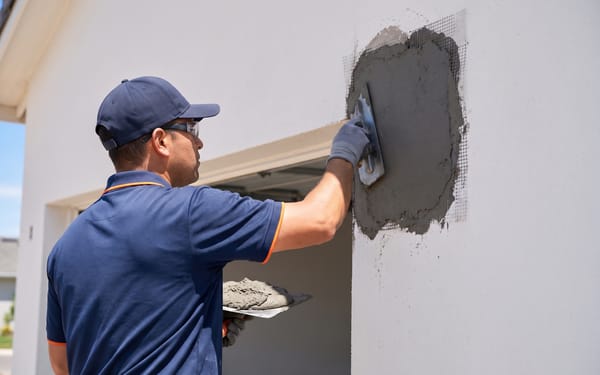
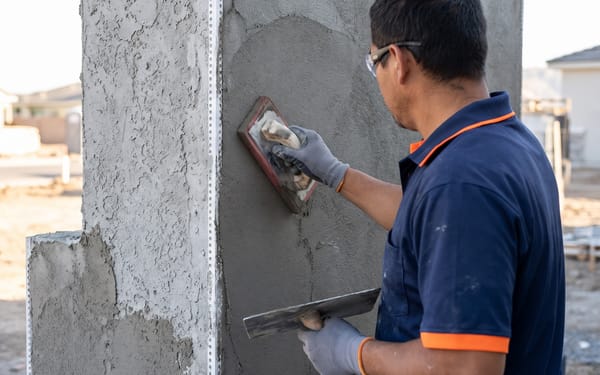
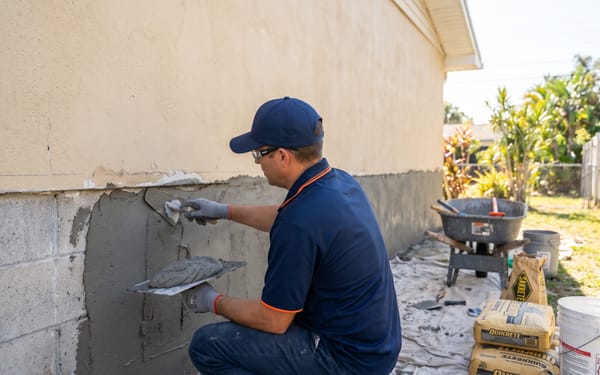
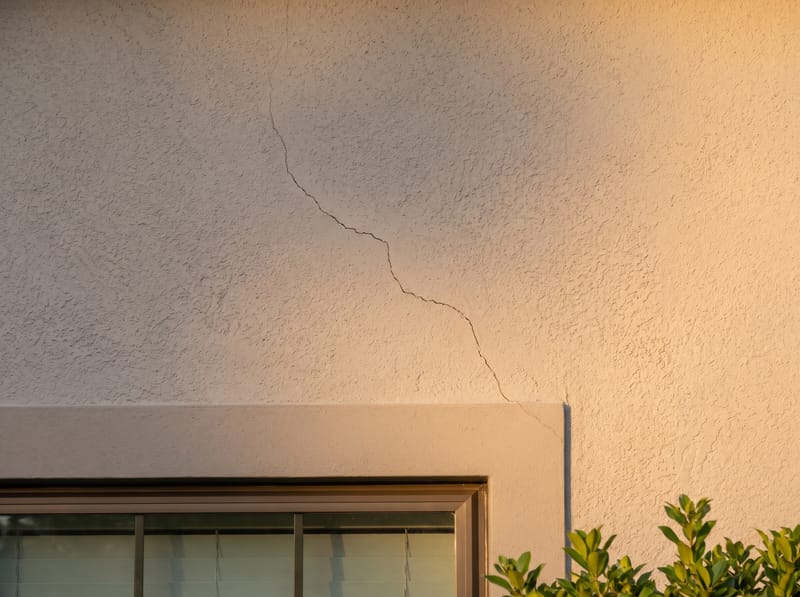
Alafaya grew fast and all at once. In ZIP 32828, 5,161 homes went up in the 1990s and 10,062 in the 2000s, and then building slowed, with only 679 added since 2015. Most homes here are close in age, so their stucco tends to show the same signs: hairline cracks at window and door corners, sealant that has hardened and pulled away, and earlier touch-ups that no longer match.
On the tax roll, 97.6% of homes in the ZIP are classed as masonry, but many two-story houses from this era pair a block first floor with a wood-frame second floor, both finished in stucco. Upstairs, the stucco sits on lath over a water barrier, and the two kinds of wall move differently. A horizontal crack where the floors meet is common, and it is worth sealing before rain finds it.
At ground level, look at the bottom edge of the stucco. Over twenty years, mulch and soil often build up until they cover the weep screed, the metal edge that lets water drain out, and sprinklers may soak the same wall every night. The code calls for that edge to sit clear of the ground, as our stucco installation guide explains, and keeping it clear prevents a lot of staining low on the wall.